You Want to Study in usa, Right?
My dream is to study in USA.
The United States of America is one of the world’s most popular destinations for international students. With thousands of accredited colleges and universities, a wide range of academic programs, advanced research facilities, flexible study options, and strong career opportunities, the USA offers students the opportunity to receive a globally recognized education and build a successful international career.
From undergraduate degrees to master’s programs, doctoral studies, community colleges, English language courses, and professional programs, students can choose an academic pathway that matches their educational background, career goals, and budget.
At Zumarah Visa Consultants, we help Pakistani students explore suitable study options in the USA, prepare their applications, and receive guidance throughout the student visa process.
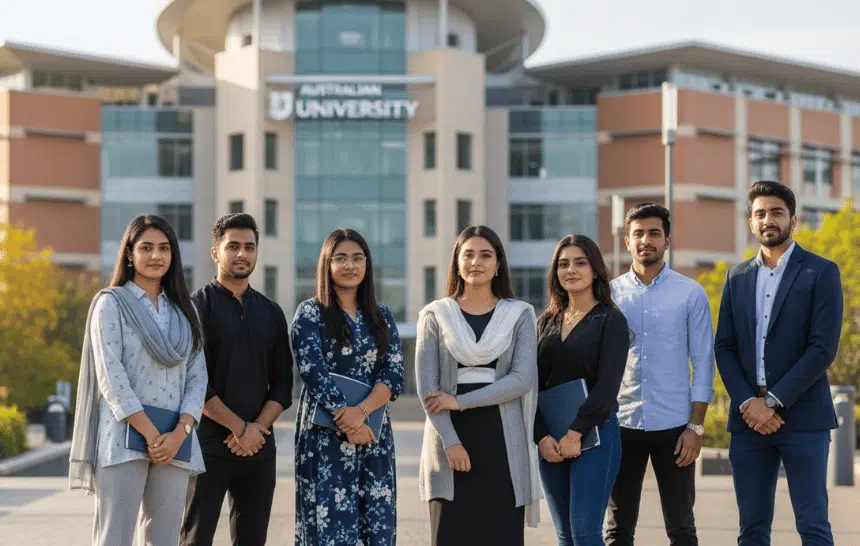
Pakistani Students Love USA Because:
- Globally recognized education
- Wide range of academic programs
- Strong technology and research environment
- Flexible study options
- Career-focused education
- International exposure
- Diverse campus communities
- Research opportunities
- Scholarship opportunities
- Professional development opportunities
- For students interested in fields such as technology, business, engineering, health sciences, and research, the USA offers a wide variety of academic pathways.
U.S.A Education System
The American education system offers different academic pathways depending on a student’s educational background and career goals.
Community College
- Community colleges generally offer:
- Associate Degrees
- Transfer Programs
- Career and Technical Programs
- English Language Programs
Many students complete an associate degree and later transfer to a four-year university to complete a bachelor’s degree.
Top Universities and Colleges in the USA for International Students
- Touro University (New York)
- Westcliff University (Irvine, California)
- Hofstra University (Jonesboro, USA)
- Stanton University (Garden Grove, California)
- Trine University (Angola, Indiana)
- Lamar University (Beaumont, Texas)
- Central Michigan University (Mount Pleasant, Michigan)
- Plymouth State University (Plymouth, USA)
- Western Michigan University (Michigan, USA)
- Full Sail University (Winter Park, Florida)
- Merritt College (Oakland, California)
- Berkeley City College (Berkeley, California)
- College of Alameda (Alameda, California)
- Salt Lake Community College (Salt Lake City, Utah)
- Bethesda University (Anaheim, California)
- California State University, Los Angeles (Cal State LA) (Los Angeles, California)
- Monroe University (Bronx, New York)
- St. Francis College (New York, USA)
Bachelor’s Degree
A bachelor’s degree generally takes approximately four years of full-time study. Students can choose a major subject and may also select minors or additional areas of study.
Examples include:
- Bachelor of Computer Science
- Bachelor of Business Administration
- Bachelor of Engineering
- Bachelor of Information Technology
- Bachelor of Accounting
- Bachelor of Nursing
Master’s Degree
Master’s programs generally take one to two years, depending on the field and program structure.
Popular options include:
- MBA
- MS Computer Science
- MS Data Science
- MS Artificial Intelligence
- MS Cybersecurity
- MS Engineering
- MS Finance
- MS Public Health
Doctoral Degree / PhD
- Doctoral programs are designed for students interested in advanced research, academic careers, and specialized professional fields.
English Language Programs
- Students can also study English through Intensive English Programs. These programs may help students improve their English language skills for academic, professional, or personal purposes.
Admission Requirements for U.S. Universities
Admission requirements vary by university, degree level, and program. Typical requirements may include:
For Undergraduate Admission
- High school or intermediate certificate
- Academic transcripts
- Passport
- English language test score, where required
- Personal statement or essay
- Letters of recommendation, where required
- Financial documentation
- Application form
For Master’s Admission
- Bachelor’s degree
- Academic transcripts
- Passport
- English language test score, where required
- Statement of Purpose (SOP)
- Resume/CV
- Letters of Recommendation (LORs), where required
- Financial documents
- GRE/GMAT, where required by the program
For PhD Admission
Master’s or relevant bachelor’s degree, depending on the program
Academic transcripts
Research proposal, where required
Statement of Purpose
Academic CV
Letters of Recommendation
English language test score
Additional tests or requirements according to the institution
English Language Requirements
Many U.S. universities require international students to demonstrate English language proficiency.
Common tests may include:
- IELTS
- TOEFL iBT
- PTE Academic
- Duolingo English Test
The required score varies according to the university and program. Some universities may offer alternative options or English language pathways.
Important: English language requirements should always be checked according to the specific university and program selected.
Intakes in the USA
Many U.S. institutions offer multiple intakes during the year.
Fall Intake
Usually begins around August or September.
This is often the largest intake and may offer the widest selection of programs.
Spring Intake
Usually begins around January.
This can be a good option for students who miss the Fall admission deadline.
Summer Intake
Some institutions offer programs beginning during the summer months.
Application deadlines vary by university and program, so students should begin preparing their applications well in advance.
Cost of Studying in the USA
The cost of studying in the United States depends on several factors, including:
- University or college
- Program
- Degree level
- Location
- Accommodation
- Lifestyle
- Health insurance
- Transportation
Tuition fees can vary significantly between institutions, and living expenses also differ considerably between locations. EducationUSA emphasizes that students should evaluate both tuition and living expenses when planning their U.S. education budget.
Scholarships and Financial Aid
Many U.S. universities provide scholarships and financial aid opportunities for international students.
Possible forms of financial support include:
- Merit-based scholarships
- Academic scholarships
- Need-based financial aid
- University grants
- Tuition discounts
- Departmental scholarships
- Graduate assistantships
- Research assistantships
- Teaching assistantships
Scholarship availability, eligibility criteria, award amounts, and deadlines vary by institution. EducationUSA maintains resources for international student scholarships and financial aid opportunities.
USA Student Visa
International students generally require an appropriate student visa to study in the United States.
F-1 Student Visa
The F-1 visa is generally used for academic study at a U.S. college, university, or English language institution.
M-1 Student Visa
The M-1 visa is generally used for vocational or other recognized non-academic study.
J-1 Exchange Visitor Visa
The J-1 visa is used for approved exchange programs and certain educational exchange activities.
The appropriate visa category depends on the type of study or program. Students must generally be accepted by an eligible institution or program before applying for the relevant visa.
USA Student Visa Process
Step 1: Select a Suitable Program
Choose a university, college, or educational institution according to:
Academic background
Career goals
Program requirements
Budget
Location
Scholarship opportunities
Step 2: Submit University Applications
Prepare and submit the required application documents.
Step 3: Receive Admission
If accepted, the institution provides the relevant admission documentation.
Step 4: Receive the Form I-20
For F-1 and M-1 students, the institution generally issues a Form I-20 after the required admission and financial processes are completed.
Step 5: Pay the Required SEVIS Fee
Students must follow the applicable requirements for the Student and Exchange Visitor Information System.
Step 6: Complete the Visa Application
Students complete the relevant visa application and follow the applicable U.S. visa application procedures.
Step 7: Attend the Visa Interview
The student should be prepared to explain:
Why they chose the USA
Why they selected the particular university
Why they chose the specific program
Their academic background
Their career goals
Their financial plan
Their study plans
Step 8: Prepare for Departure
After the visa process, students prepare for travel, accommodation, university enrollment, and arrival in the USA.
Documents Required for a USA Student Visa
Students may need documents such as:
- Valid passport
- University admission letter
- Form I-20, where applicable
- Visa application confirmation
- SEVIS-related documentation
- Academic transcripts
- Educational certificates
- English language test results
- Financial documents
- Bank statements
- Sponsor documents, if applicable
- Scholarship or funding documentation, if applicable
- Proof of relationship with financial sponsor, where applicable
- Supporting documents related to academic and financial background.